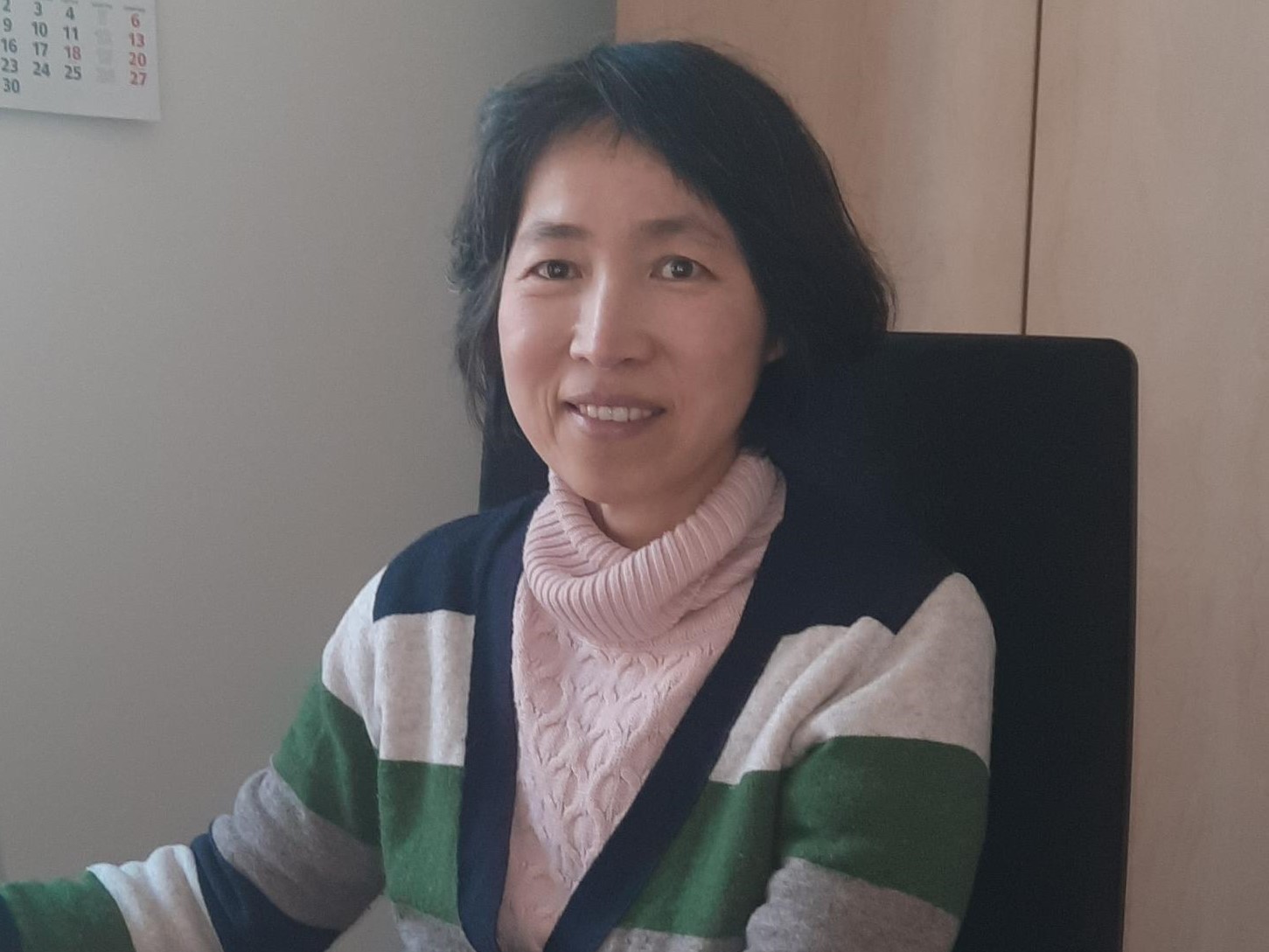
Dr. Hyun-Ah Kim (geb. 1972) ist Musikwissenschaftlerin und Theologin und engagiert sich für wegweisende interdisziplinäre Forschung und Lehre, die Geistesgeschichte (insbesondere theologische Philosophie) mit Musikwissenschaft und Philologie (insbesondere Hebräisch) verbindet. Zu ihren Fachgebieten gehören: die Geschichte und Theologie der christlichen Musik, Ethik und Spiritualität der Musik, Musik als rhetorisches Mittel, liturgische Musik sowie Musik und Religionspädagogik, mit einem besonderen Fokus auf den Humanismus im Zeitalter von Reformation und Renaissance. Sie erhielt einen BA und BM von der Yonsei University, Südkorea, und promovierte an der Durham University in England.
Kim führte Postdoktorandenforschung unter der Schirmherrschaft verschiedener akademischer Institutionen durch, darunter das Centre for Reformation & Renaissance Studies an der University of Toronto, die Henry E. Huntington Library and Art Gallery (Kalifornien), die Johannes a Lasco Bibliothek in Emden, das H. Henry Meeter Center for Calvin Studies in Grand Rapids, das Forschungszentrum Gotha der Universität Erfurt sowie die Herzog August Bibliothek in Wolfenbüttel. Kim war zuvor reguläre Professorin und außerordentliche Professorin am Trinity College der University of Toronto und der Toronto School of Theology, wo sie eine Reihe innovativer Kurse an den Schnittstellen von Musik, Theologie, Religion und Spiritualität unterrichtete. Derzeit ist sie Associate Fellow des HDC Centre for Religious History, Vrije Universiteit Amsterdam, und International Fellow der Europäischen Melanchthon-Akademie Bretten.
Dr. Hyun-Ah Kim (b. 1972) is a musicologist and theologian committed to pioneering interdisciplinary research and teaching which combine intellectual history (esp. theological philosophy) with musicology and philology (esp. Hebrew). Her areas of expertise include the history and theology of Christian music, ethics and spirituality of music, music as rhetoric, liturgical music, and music and religious education, with a special focus on the Reformation and Renaissance humanism. She received a BA and a BM from Yonsei University, South Korea, and completed a PhD at Durham University in England.
Kim conducted post-doctoral research under the auspices of various academic institutions, including the Centre for Reformation & Renaissance Studies in the University of Toronto, Henry E. Huntington Library and Art Gallery (California), Johannes a Lasco Bibliothek in Emden, H. Henry Meeter Center for Calvin Studies in Grand Rapids, and Forschungszentrum Gotha, Universität Erfurt, and Herzog August Bibliothek in Wolfenbüttel. Kim was previously Regular Professor and Adjunct Professor at Trinity College in the University of Toronto and the Toronto School of Theology, where she taught a number of innovative courses on the intersections of music, theology, religion and spirituality. Currently, she is Associate Fellow of the HDC Centre for Religious History, Vrije Universiteit Amsterdam, and is International Fellow of the Europäische Melanchthon-Akademie Bretten.
Ausgewählte Publikationen / Selected Publications
Bücher / Books(2025):
Music, Rhetoric and Christian Hebraism in Early Modern Europe: Reuchlin’s Reconstruction of the Modulata Recitatio. Song Studies Book Series. Amsterdam: Amsterdam University Press; New York: Routledge.
(2023), ed.
Music and Religious Education in Early Modern Europe: The Musical Edification of the Church. St Andrew Studies in Reformation History Series. Leiden & Boston: E.J. Brill.
(2017; paperback, 2019):
The Praise of Musicke, 1586: An Edition with Commentary. Music Theory in Britain 1500 – 1700. New York: Routledge.
(2017; paperback, 2019), eds.
Music, Theology, and Justice, with M. O’Connor and C. Labriola, Lanham, MD: Lexington Books; London: Bloomsbury Academic.
(2015; paperback, 2017):
The Renaissance Ethics of Music: Singing, Contemplation, and Musica Humana. Religious Cultures in the Early Modern World no. 19. London: Pickering & Chatto; New York: Routledge.
(2008):
Humanism and the Reform of Sacred Music in Early Modern England: John Merbecke the Orator and The Booke of Common Praier Noted (1550). St Andrews Studies in Reformation History. Aldershot: Ashgate; New York: Routledge.
Beiträge für Sammelbände und Zeitschriften / Essays in edited volumes and journals(2023):
Music, Persecution, and the Freedom of the Soul: Songs of Transcendence in Philips van Marnix’s Het Boeck der Psalmen Dauids (1580). In:
Kerk en Theologie 74/2, pp. 193–208.
(2021):
In Search of Decorum: The Humanist Union of Music, Rhetoric and Moral Philosophy in the Late Fifteenth Century. In:
Das 15. Jahrhundert. Melanchthon-Schriften Der Stadt Bretten 15. eds. G. Frank., M. Herweg und F. Fuchs. Stuttgart: frommann-holzboog, pp. 261–276.
(2020):
Erasmus on I ad Corinthios 14. 15-19: The Erasmian Theology of Music and Its Legacy in Reformation England. In:
Authority Revisited: Towards Thomas More and Erasmus in 1516. eds. W. François, V. Soen et al. Lectio Series. Studies in the Transmission of Texts and Ideas. Turnhout: Brepols, pp. 261 – 304.
(2019):
The Humanist Defense of Music Education in Civil and Religious Life: The Praise of Musicke (1586) and Apologia Musices (1588). In:
Music, Education and Religion: Intersections and Entanglements. eds. H. Westerlund, P. Alperson and A. Kallio. Bloomington, IN: Indiana University Press, pp. 183 – 195.
(2018):
Singing, Prayer and Sacrifice: The Neo-platonic Revival of Musica humana in the Swiss Reformation. In:
Music and Theology in the European Reformations. eds. D. Burn, G. McDonald, J. Verheyden, and P. De Mey. Turnhout: Brepols, pp. 250 – 266.
(2017):
Music of the Soul (Animae Musica): Marsilio Ficino and the Revival of Musica humana in Renaissance Neo-Platonism. In:
Reformation & Renaissance Review 19.2., pp. 122–134.
(2013):
Homo Ludens, Music, and Ritual: The Play/Non-Play Characters of Religious Music. In:
Questions Liturgiques /Studies in Liturgy 94.3, pp. 220 – 246.
Weitere
Informationen / Further
Information


 English
  Français